
EP Mobile
Скачать APKEP Mobile Скриншоты приложения



EP Mobile AI Обзор редактора
EP Mobile is a specialized tool designed for cardiac electrophysiologists, offering essential functionalities for daily practice. It streamlines calculations and provides quick access to key information, enhancing efficiency in cardiac electrophysiology workflows. A valuable resource for EP professionals.
Комплексный анализ
EP Mobile is a dedicated application tailored for cardiac electrophysiologists. It offers a suite of tools designed to simplify complex calculations and provide immediate access to critical data relevant to their field. The app enhances workflow efficiency by centralizing key resources. User experience is generally smooth, though the app's highly specialized nature limits its appeal to a specific audience. Its value lies in its ability to streamline daily tasks for EP professionals.
Ключевые преимущества
- Specialized tools for cardiac electrophysiologists
- Streamlines complex calculations efficiently
- Provides quick access to essential information
Области для улучшения
- Niche application; limited use for general users
- Potential reliance on mobile device; risk of data loss if not backed up
Описание EP Mobile
Site Editorial Commentary:Mobile tools for medical professionals who manage abnormal heart rhythms.
EP Mobile is a comprehensive mobile application designed as an essential tool for cardiac electrophysiologists, cardiologists, cardiology fellows, internists, emergency room physicians, medical students, nurses, technicians, and all healthcare professionals involved in the management of cardiac arrhythmias. This app serves as a valuable resource for quick access to critical information and calculations required in daily practice.We welcome your feedback! Please email us with any suggestions for new features, improvements, or any concerns you may have. We are committed to continuously enhancing EP Mobile to meet your needs.
EP Mobile -- The Swiss Army Knife of Electrophysiology!
Key Features:
- Integrated drug reference with a convenient creatinine clearance toolbar for dosage adjustments.
- Creatinine clearance calculator for accurate renal function assessment.
- Pacing techniques: Guidance on Para-Hisian pacing and RV apex vs. base pacing strategies.
- Drug dose calculators for common anticoagulants and antiarrhythmics: dabigatran, dofetilide, rivaroxaban, sotalol, apixaban, and edoxaban.
- Warfarin clinic weekly dose calculator to assist in managing warfarin therapy.
- Interval to rate conversion tool for quick heart rate calculations.
- QTc interval calculators using multiple formulas (Bazett, Fridericia, Sagie, and Hodges) to assess repolarization.
- QT calculators specifically designed for patients with intraventricular conduction delay (IVCD).
- Risk score for QT prolongation during hospitalization to identify patients at risk.
- Atrial fibrillation risk scores (CHads2, CHA2DS2-VASc, ATRIA) for stroke risk stratification.
- Bleeding risk scores (HAS-BLED, HEMORR2HAGES, ATRIA, SAMe-TT2R2, ORBIT) to evaluate bleeding risk in patients on anticoagulation.
- In-hospital complication risk score following ICD implantation.
- Mortality risk score for patients with ICDs.
- Risk score calculators for Hypertrophic Cardiomyopathy to aid in risk assessment.
- Syncope risk scores (SF Rule, Martin, OESIL, EGSYS) to help determine the etiology of syncope.
- CMS (Medicare) ICD guidelines calculator (updated to 2018 guidelines) for appropriate ICD implantation criteria.
- VT localization algorithms:
- Differentiation between Epicardial and endocardial ventricular tachycardia.
- Localization of Outflow tract ventricular tachycardia.
- Localization of Mitral annular ventricular tachycardia.
- WPW accessory pathway location algorithms (Arruda, modified Arruda, D'Avila, and Milstein) to assist in localization.
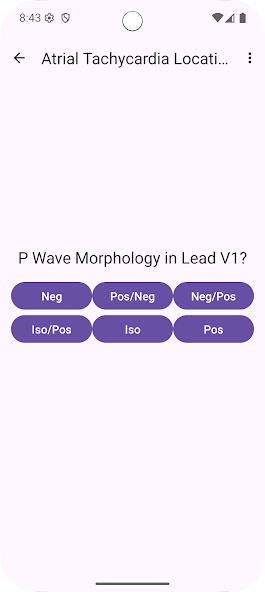
- Atrial tachycardia localization algorithm for mapping atrial arrhythmias.
- Entrainment mapping tool for complex arrhythmia analysis.
- Date calculator for easy date manipulation.
- Body weight calculator (ideal and adjusted body weight) for medication dosing.
- Information on Long QT syndrome: diagnosis, subtypes, and ECG patterns.
- List of drugs associated with Long QT syndrome.
- Diagnostic criteria for Short QT syndrome.
- Diagnostic criteria for Brugada syndrome.
- List of drugs to avoid in Brugada syndrome.
- LVH ECG criteria, including Romhilt-Estes score and other relevant criteria.
- Right ventricular hypertrophy criteria for ECG diagnosis.
- ARVC/D (Arrhythmogenic Right Ventricular Cardiomyopathy/Dysplasia) diagnostic criteria (1994 and 2010 versions).
- ARVC risk calculator to assess the risk of arrhythmias.
- Normal EP values for reference during electrophysiology studies.
- Wide complex tachycardia algorithms for differential diagnosis.
- Ability to copy risk score results to the clipboard for seamless integration into reports.
- Cardiac tamponade assessment to guide decision-making for urgent vs. delayed pericardiocentesis.
Categories: Medicine, Cardiology, Electrophysiology, Arrhythmia.
EP Mobile is a free, ad-free, and open-source application, licensed under the GNU GPL v3 license. The source code is available at https://www.github.com/mannd/epmobile.


